
GMHF takes centre stage at forum
- Jun 23
- 2 min read
GM Housing First colleagues and a co-production panel member took centre stage at a homelessness forum recently.
The Good, the Bad and the Ugly Salford Homeless Forum event featured a number sector professionals to discuss the issue across the city.
The GMHF team delivered a powerful showcase of co-production through their song, “Embrace, No Disgrace,” which was very well received.
Then Team Leader Zoe Brooks spoke about co-production within service delivery and the core principles.
Our co-production star Lisa spoke about her experience, with fellow GMHF Worker Kim Spencer leading on the Q&A sharing her voice and lived experience.
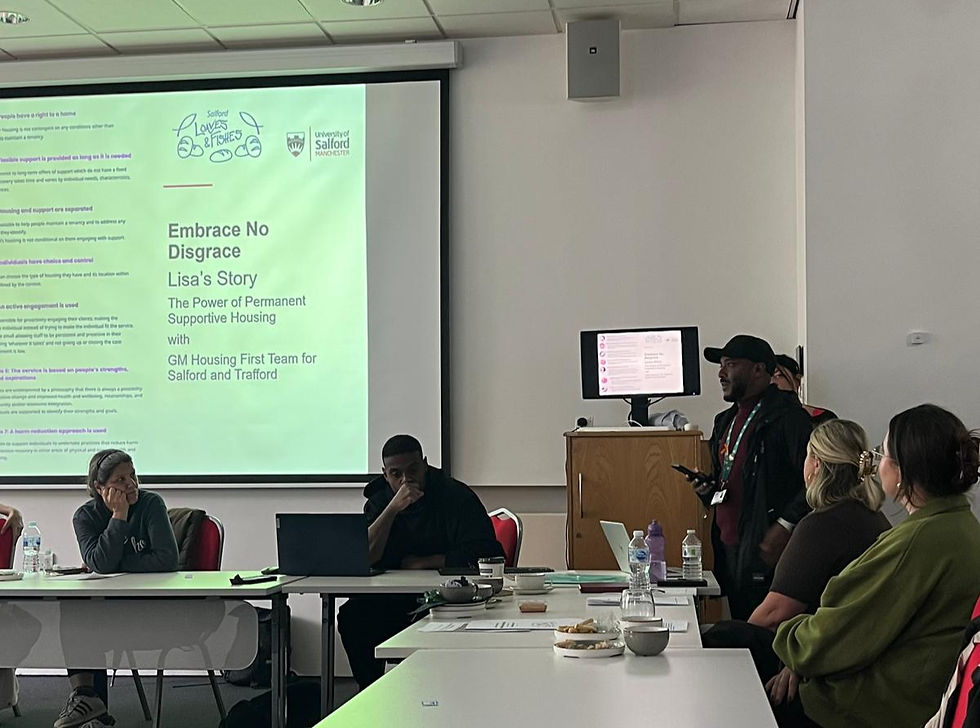
In addition, GMHF Worker Shajahan Noor shared a thoughtful and impactful piece of work reflecting on his role, which added great value to the session.
His piece is as follows:
The Power of the Unasked Question
"When I first began my journey as a Housing First Worker over two years ago, I viewed my role through the lens of a traditional job description: managing cases, coordinating care, and maintaining housing stability. But after two years on the frontline working with vulnerable clients with complex needs, I’ve realised that the true definition of my role is something much deeper.
“I’ve learned that our customers often live in a storm of 'whys.' They are frequently overwhelmed by mental health challenges, learning disabilities, or other ailments that make the world feel like a maze. They might be asking: 'Why do I have these ill thoughts? Why must I take this medicine? Why has my home fallen into disarray?'
“The tragedy is that many of these individuals don't know who to direct those questions to. In many cases, they are struggling so much that they haven't even been able to articulate the questions in the first place.
“I’ve come to define my role not just as a worker, but as a professional advocate. My job is to step into that silence and ask the questions they are struggling to find answers to. I use my knowledge and expertise to take those 'whys' and direct them to the right agencies, the right clinicians, and the right professionals.
“For example, I recently worked with a client who was struggling with severe hoarding. To the outside world, it looked like a housing failure. But by acting as their voice and asking the right clinical questions to the right specialists on their behalf, we discovered the root of the trauma. We moved from a housing crisis to a mental health breakthrough.
“By securing those answers, we do more than just solve a temporary problem. We provide the clarity and the tools that allow a person to progress. Ultimately, that is what we are here for: to turn those difficult questions into a foundation for independence and long-term wellbeing.”
Thanks to the team for representing the partnership and giving those who attended an insight of the work we do.


Comments